
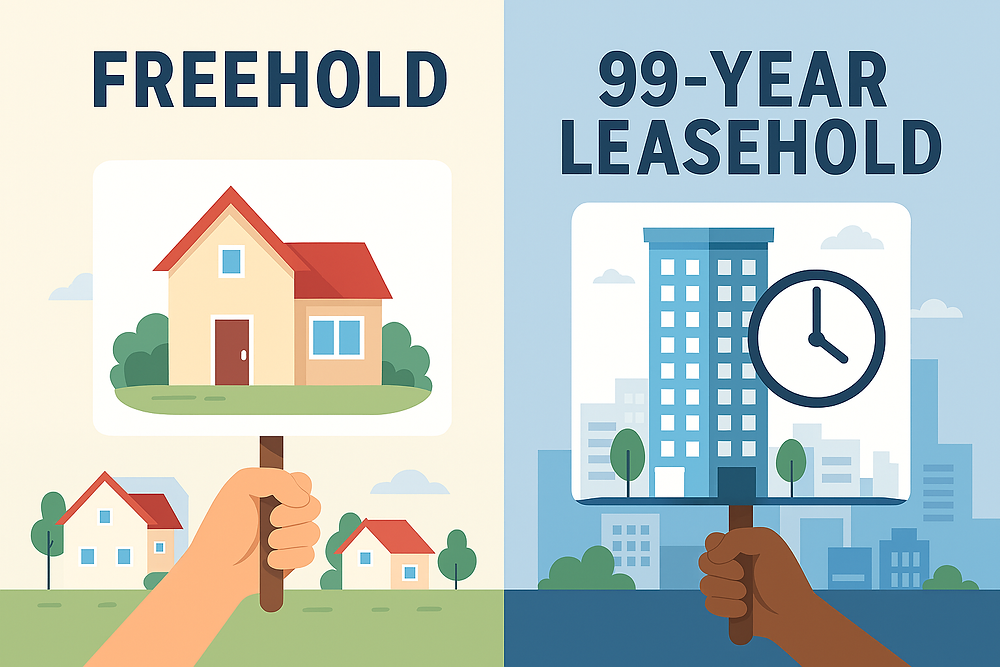
In the complex theatre of real estate, ownership is rarely a simple affair of bricks and mortar. It is a philosophy, a financial strategy, and a deeply personal statement about one’s relationship with time. This enduring conflict is best encapsulated by the eternal debate between Freehold and 99-year Leasehold—a choice between planting generational roots and maximizing immediate utility.
To understand this dichotomy, we can look at two contrasting archetypes of modern housing: the enduring promise of The Sen (Freehold) and the strategic efficiency of Tengah Gardens Residences (99-year Leasehold).
Part I: The Sen — The Weight of Forever
The Sen is not just a collection of homes; it is a repository of heritage. Freehold status grants the owner absolute dominion over the land and the structure, indefinitely. It is the real estate equivalent of eternity.
Legacy, Not Liability
The defining characteristic of The Sen is legacy. When a buyer secures a freehold property, they are purchasing a piece of the earth that can, in theory, be passed down through countless generations. This longevity comes with several emotional and financial premiums:
- Generational Wealth Preservation: Freehold land is often viewed as the ultimate store of value, weathering economic cycles more reliably than its leasehold counterparts, especially as the lease period on the latter begins to run down. The Sen is secured against the inevitability of the clock. It acts as a generational relay baton, a permanent inheritance.
- Peace of Mind: The absence of a ticking expiry date eliminates the existential anxiety inherent in leasehold tenure. Owners at The Sen are shielded from the future uncertainties of collective sales (en bloc) or depreciating asset value due to tenure erosion.
- The Price of Permanence: Freehold property commands a significant premium precisely because of this permanence. Buyers are paying not just for the square footage, but for the inherent, timeless right to the ground beneath them. This premium reflects the cost of transferring property ownership, in perpetuity, to the next generation.
The buyer choosing The Sen is prioritizing stability, roots, and the concept of home as an unshakeable fortress against the passage of time.
Part II: Tengah Gardens Residences — The Logic of the Clock
Tengah Gardens Residences, conversely, embraces the logic of maximum utility within a defined timeframe. The 99-year lease is a contract: the buyer purchases the exclusive right to use and occupy the property for a limited period, typically less than a century. This structure fundamentally shifts the financial calculus from generational preservation to optimized turnover.
Efficiency, Affordability, and Agility
Tengah Gardens represents modern urban planning. Built with contemporary design, smart features, and integrated community amenities, it offers a quality of life immediately superior to many older freehold counterparts, often at a lower entry price point.
- Affordability and Liquidity: The primary economic advantage of a 99-year lease is accessibility. By not having to purchase the land in perpetuity, the capital outlay is significantly reduced, making the property attainable for younger families or those seeking to maximize housing efficiency within their prime earning years.
- Quick Turnover and Strategic Exit: Leasehold encourages a dynamic market. The 99-year term provides a crucial window (usually the first 60-70 years) where the asset remains highly liquid. Buyers at Tengah Gardens are often optimizing for a strategic exit—holding the unit during its peak modernity and selling before the lease erosion significantly impacts value. This aligns with a mindset of quick turnover and capital redeployment.
- Focus on Utility: The buyer is paying for the utility of the structure and the amenity-filled lifestyle, knowing that the underlying asset returns to the state eventually. This encourages denser, more efficient land use, which is critical in land-scarce environments.
The Economic Calculus: Weighing Time Against Tile
The choice between The Sen and Tengah Gardens Residences ultimately forces the buyer to define their financial and personal horizon.
| Factor | The Sen (Freehold) | Tengah Gardens (99-Year Leasehold) |
| Philosophical Value | Generational permanence, roots, inheritance. | Modern efficiency, quick capital deployment, mobility. |
| Capital Growth | Strong capital preservation; value linked to land appreciation. | High appreciation initially; sharp value depreciation toward the end of the term. |
| Risk Profile | Low long-term risk; high entry cost. | Higher long-term risk (lease decay/expiry); lower entry cost. |
| Buyer Profile | The Legacy Builder; focused on generational stability. | The Pragmatist; focused on immediate lifestyle and ROI. |
The Freehold owner pays a large premium to stop the clock; the Leasehold owner pays less, accepting the ticking time, and planning to synchronize their investments around it. Neither choice is inherently superior; they are simply reflections of two distinct blueprints for life: one built for permanence, the other built for agility. The truest value of a property is determined not by the length of the tenure, but by how perfectly that tenure aligns with the owner’s lifespan and vision for their own legacy.

_1000x800.jpg "Property for Sale in Alanya")